
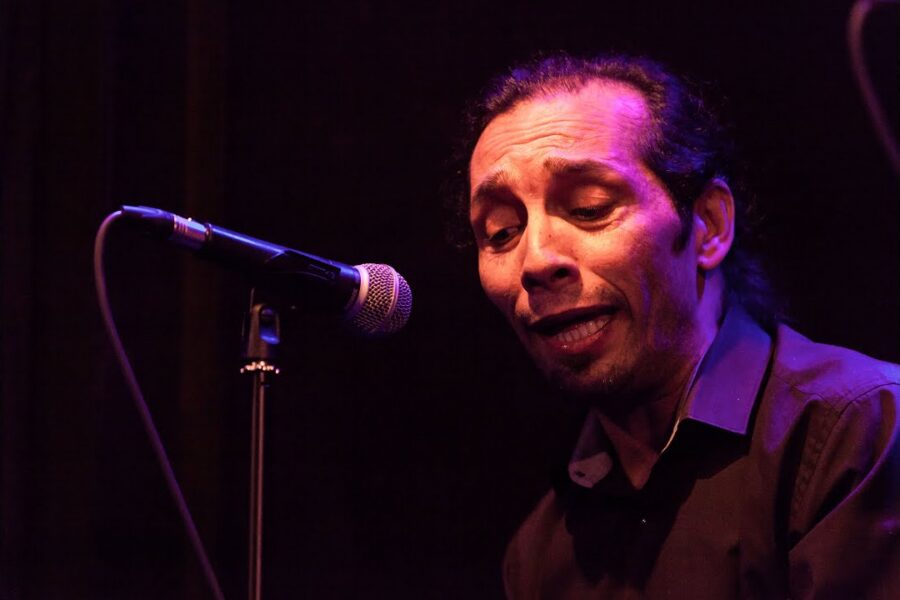
There is a sound in flamenco that cannot be taught. It can be heard, it can be imitated, but it cannot be manufactured. It is the quejío. That lament that comes out before the cante, or in the middle, or at the end — and when it truly arrives, it paralyzes the room.
What the quejío is in flamenco
The quejío is a vocal emission — a prolonged, guttural ¡ay! that the cantaor unleashes before entering the song or between lines. It is not decoration. It is not an ornament. It is the voice looking for the exact spot where it is going to hurt.
The word comes from “quejido” (moan). But a flamenco quejío is not just any moan. It is the distilled moan, what remains when everything unnecessary is stripped away. It is emotion without words yet.
In flamenco terminology, the quejío also serves a technical function: it is part of the temple, that moment when the cantaor tunes their voice and finds the pitch before starting. But the technical and the emotional here are inseparable. There is no cold quejío.
Origin and meaning of the quejío
The quejío is as old as the cante. It has no inventor and no date. It predates the palos, predates the styles — it is the starting point of everything.
Some scholars link it to the work and sorrow songs of the Roma and Andalusian peasant communities of the 18th and 19th centuries. Before there were lyrics, there were quejíos. Flamenco was born from lament, and the quejío is its purest form.
It is no coincidence that the quejío appears in the deepest palos — the seguiriya, the soleá, the toná. Where the cante goes deep, the quejío opens the way.
The quejío in cante jondo
Cante jondo — the deep song, the profound song — is the natural territory of the quejío. In palos like the seguiriya or the soleá, the quejío is not optional. It is the gateway.
When a cantaor bursts into seguiriyas, the opening quejío is already part of the cante. The room knows it. The silence that falls before the first ¡ay! is as important as the ¡ay! itself. That moment of suspension — between the silence and the quejío — is where flamenco exists in its purest state.
Cante jondo musicalizes suffering. And the quejío is the proof that this suffering is real.
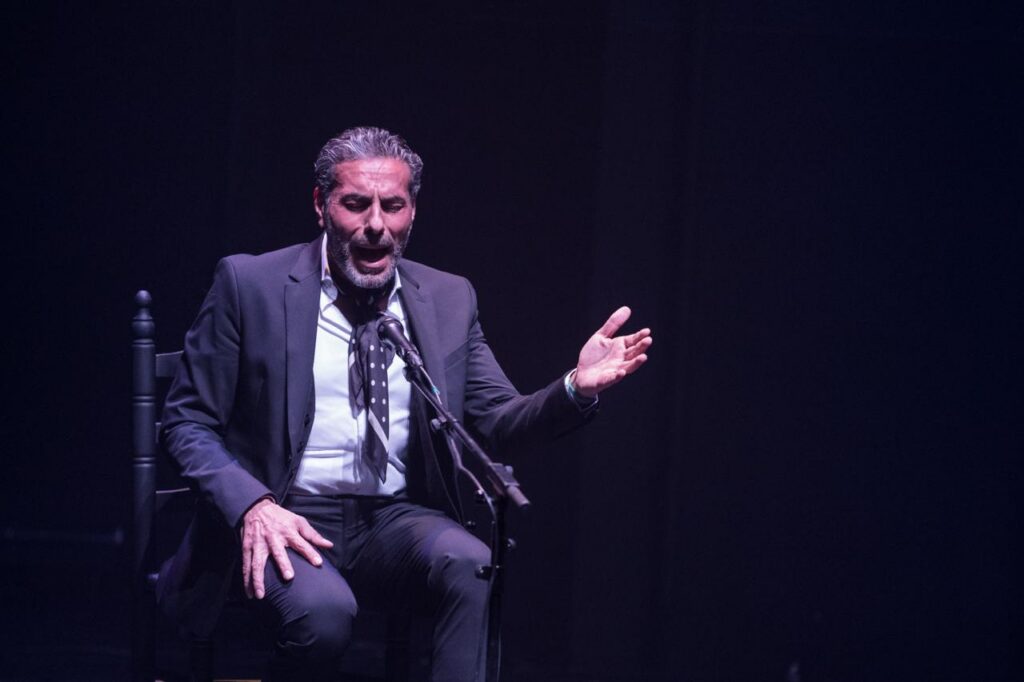
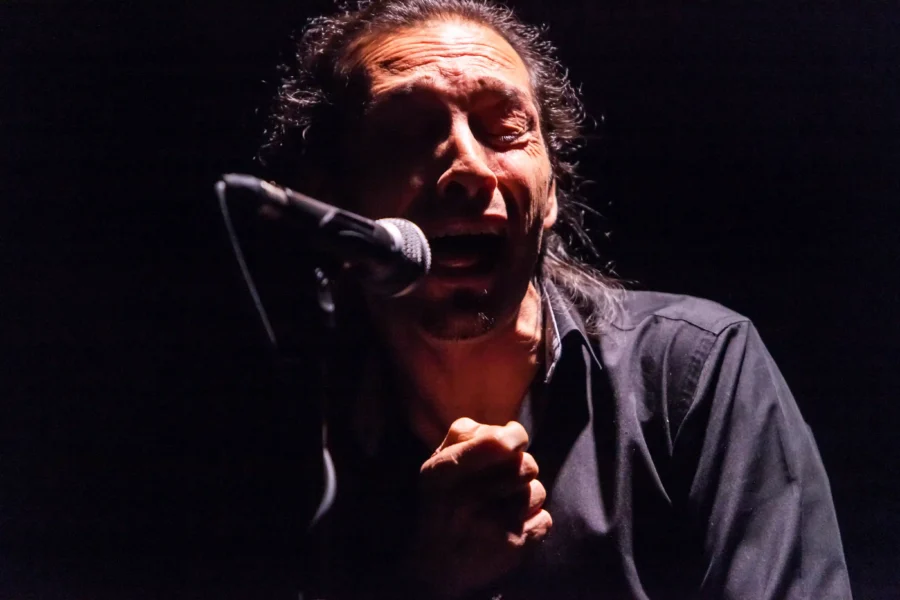
Pedro el Granaíno. Photography: Rafa Manjavacas / Deflamenco
Why the quejío is inseparable from flamenco
Because it is the sign that something real is about to happen.
A fake quejío is noticed immediately. The aficionado knows it, the artist knows it, and deep down the cantaor themselves knows it. There is no way to fake a convincing quejío. That is why it is the most honest proof of flamenco: it is either there or it isn’t.
The quejío does not distinguish between beginners and masters. A young cantaor can have a quejío that cuts the air. A veteran can have a night without a quejío. It depends on something that is not fully controlled — on whether the cante truly wants to come out that night.
The quejío live: how it is experienced in a tablao
Listening to a quejío in a tablao is different from listening to it recorded. The recording captures the sound. The tablao captures everything else — the preceding silence, the changing air, the reaction of the audience who, without knowing why, stays still.
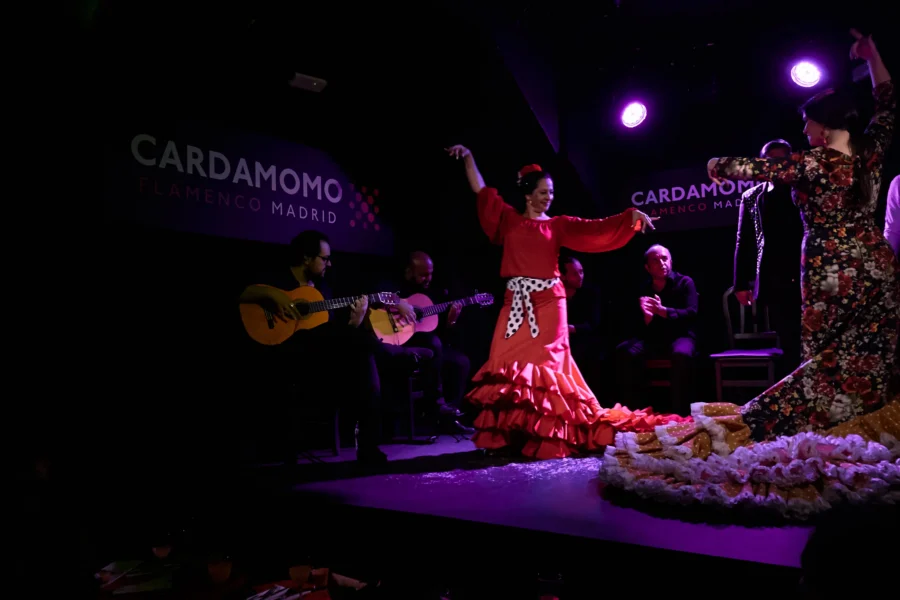
At Cardamomo, with its limited capacity and the stage just a few meters away, the quejío arrives unmuted. There is no safe distance. The cantaor is right there, and when they unleash the quejío, they do it in your direction.
That is what makes the flamenco tablao irreplaceable. The flamenco styles can be studied, they can be listened to at home. But the real quejío, the one that leaves you speechless, only exists live.