

 4000 reviews
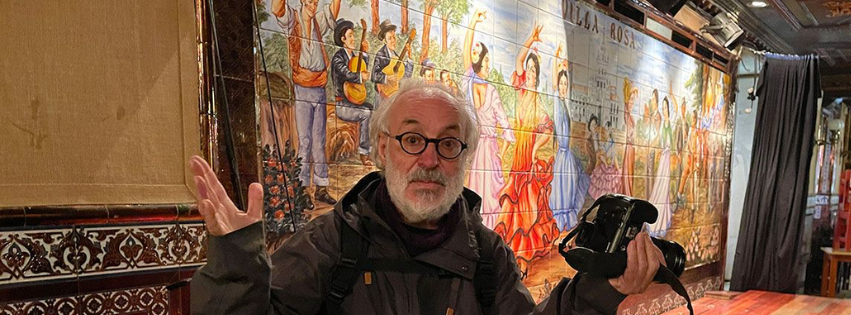
The Vision of Paco Manzano — Flamenco in Madrid (1986–2004)
The photographer who documented the golden age of flamenco in Madrid
Paco Manzano (La Solana, Ciudad Real, 1955) came to flamenco without looking for it. A sociology student in Madrid, he funded his studies selling hair cosmetics to the city’s hairdressers. Many of his clients commissioned portraits for fashion competitions, and so, almost by accident, he ended up photographing live music for specialist magazines.
What began with folk and singer-songwriters inevitably led to flamenco.
From the mid-eighties, Manzano became the most rigorous visual chronicler of a scene that official history deliberately ignored. While the “movida madrileña” monopolised covers and subsidies, something else was happening at the Colegio Mayor San Juan Evangelista, the Círculo de Bellas Artes and the backstage rooms of the Teatro Alcalá Palace: Camarón, Paco de Lucía, Chocolate, Antonio Canales, El Cabrero and El Farruco were building the golden age of contemporary flamenco in Madrid.
Manzano photographed everything with a 36-exposure roll that sometimes covered three concerts. Scarcity demanded precision — the shutter was only pressed when the gesture, the light and the emotion of the artist reached the exact point. The result is an archive of more than 370,000 analogue negatives that constitutes the most complete visual document of that period.
Part of that archive hangs today on the walls of Cardamomo. Eight works. Eight unrepeatable moments.
All images are the exclusive property of © Paco Manzano. Reproduction without the express authorisation of the author is prohibited.
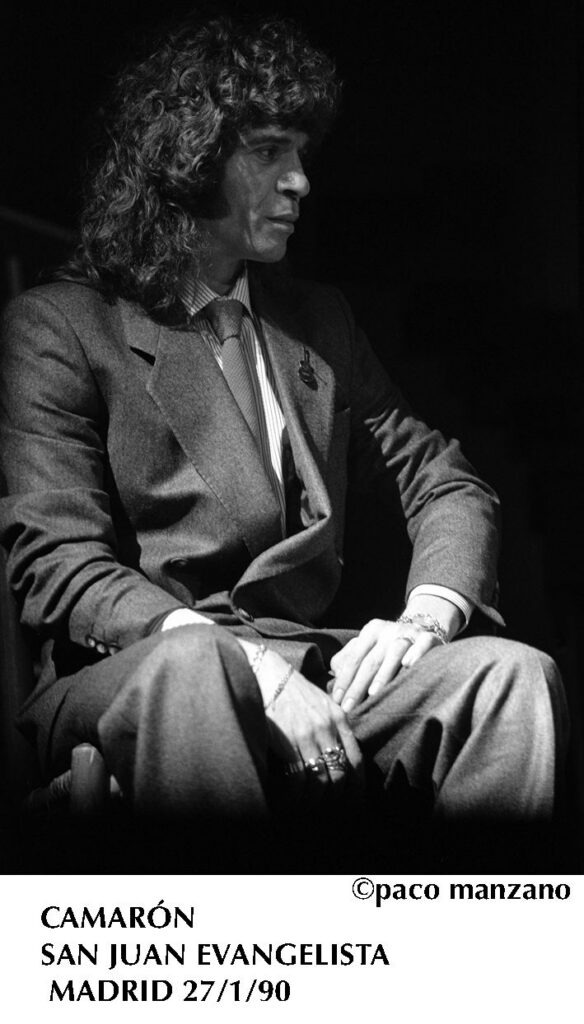
1. Camarón de la Isla
San Juan Evangelista, Madrid, January 1990. Two years before his death. The photograph chosen by Carnegie Hall for The New York Times.
The photograph chosen by Carnegie Hall
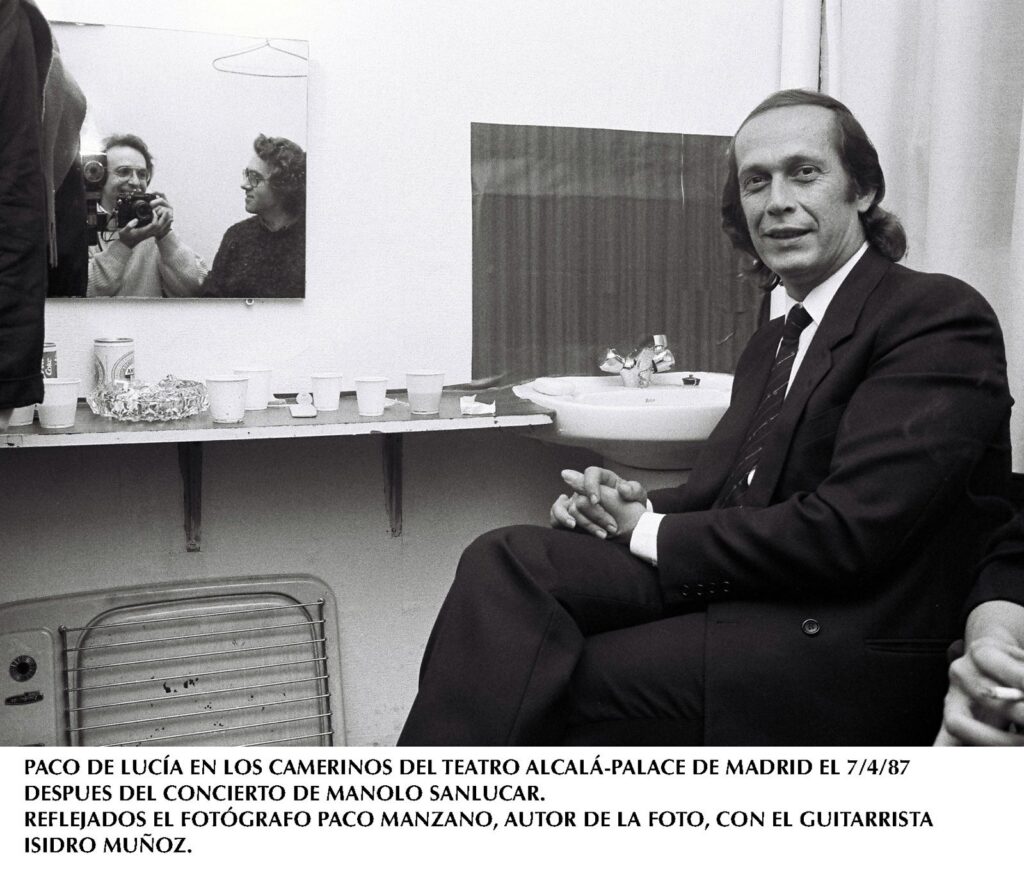
2. Paco de Lucía
Backstage at the Teatro Alcalá-Palace, Madrid, April 1987. Not on stage — in the intimacy of the dressing room. The photograph that should not exist and that changes everything.
The photograph that should not exist
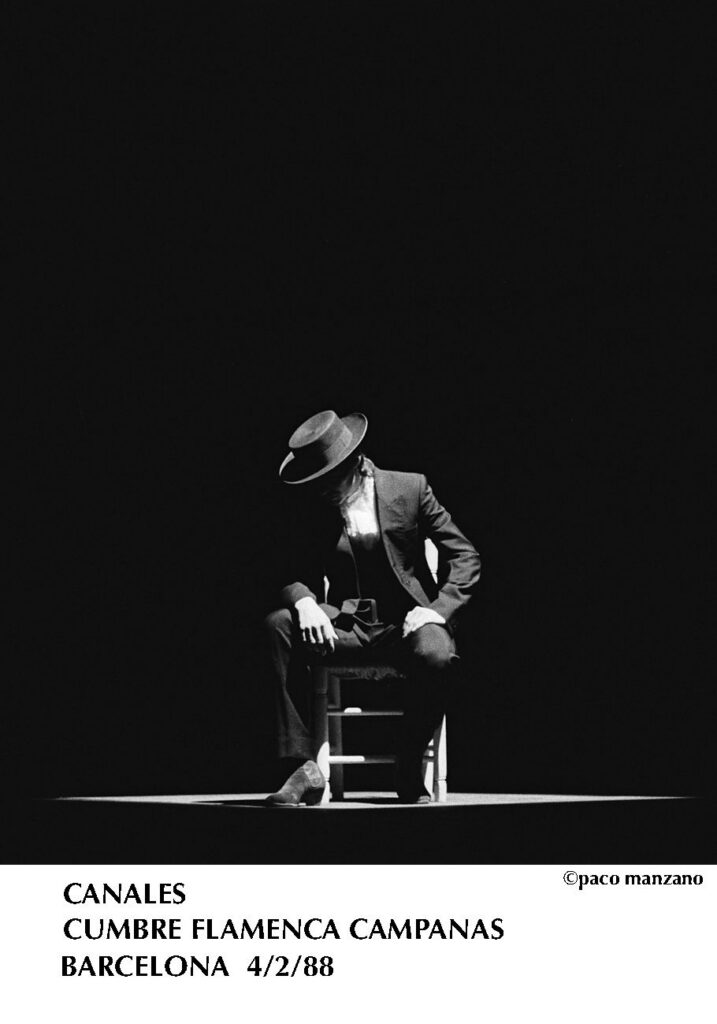
3. Antonio Canales
Cumbre Flamenca Campanas, Barcelona, February 1988. A man alone on stage, hat tilted forward, the silence before the movement.
The silence before the movement
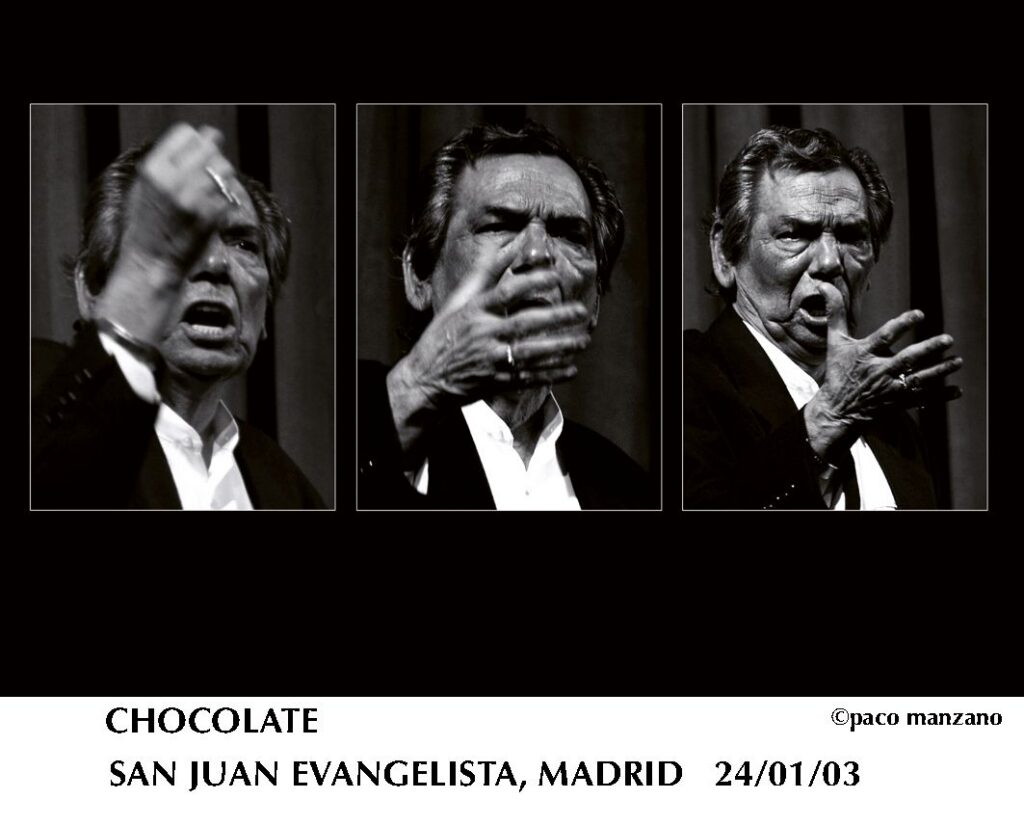
4. Antonio Núñez “Chocolate”
San Juan Evangelista, Madrid, January 2003. The triptych of the fist seeking the duende. 72 years old, singing as if the world would end at dawn.
The fist seeking the duende
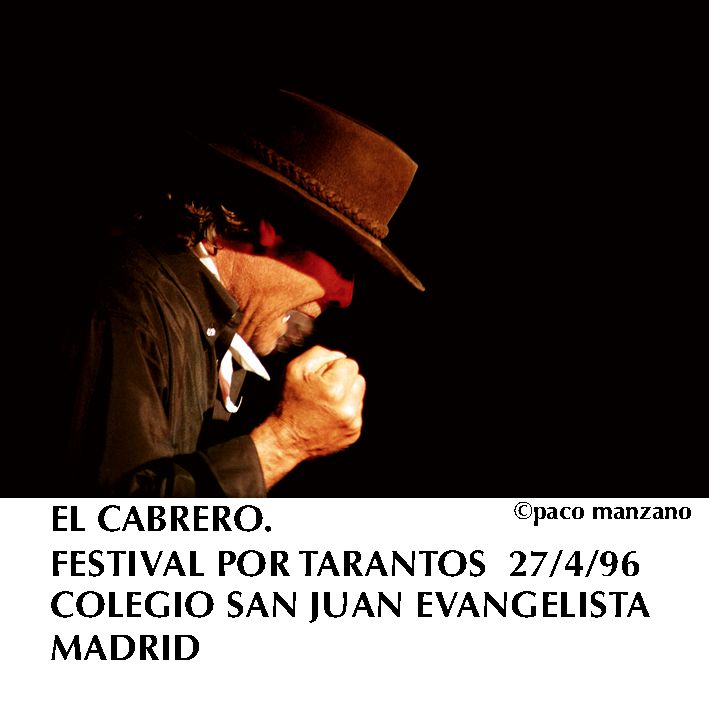
5. El Cabrero
Festival por Tarantos, Colegio San Juan Evangelista, Madrid, April 1996. The wide-brimmed hat, the clenched fist, the rebel voice of the Andalusian countryside in the big city.
The rebel voice of the Andalusian countryside
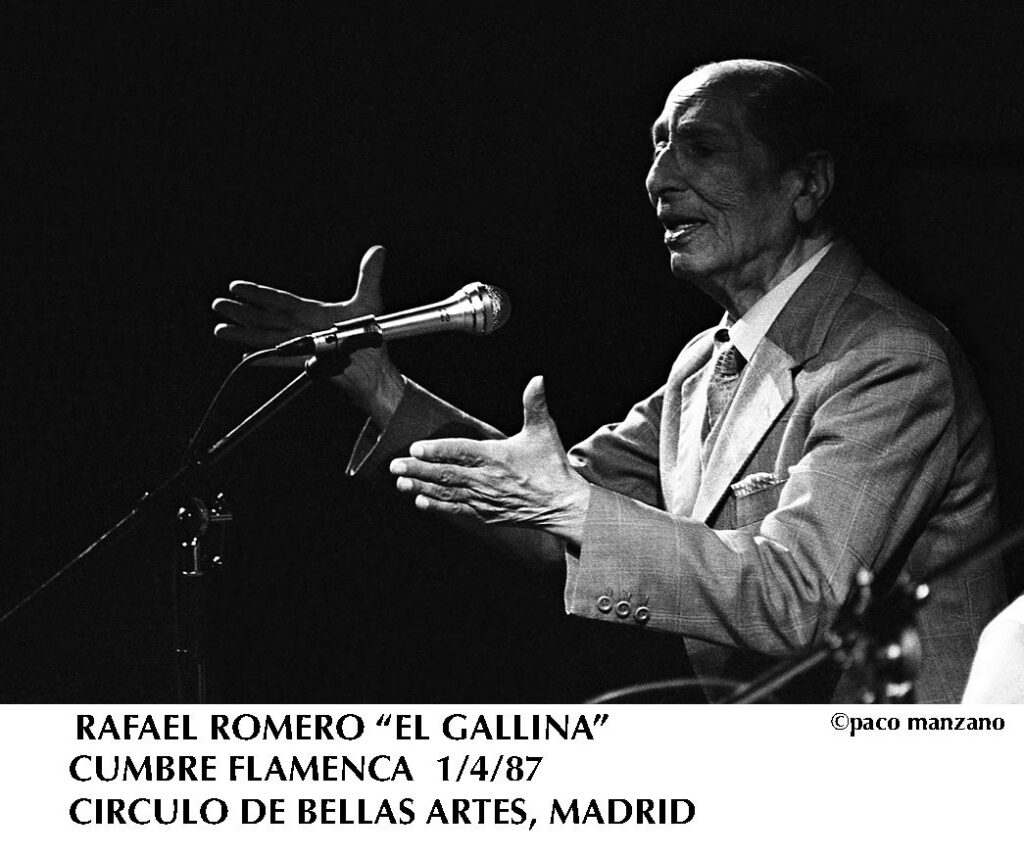
6. Rafael Romero “El Gallina”
Cumbre Flamenca, Círculo de Bellas Artes, Madrid, April 1987. Both hands open before the microphone. The grammar of cante: the prologue to everything about to happen.
The hands before the voice arrives
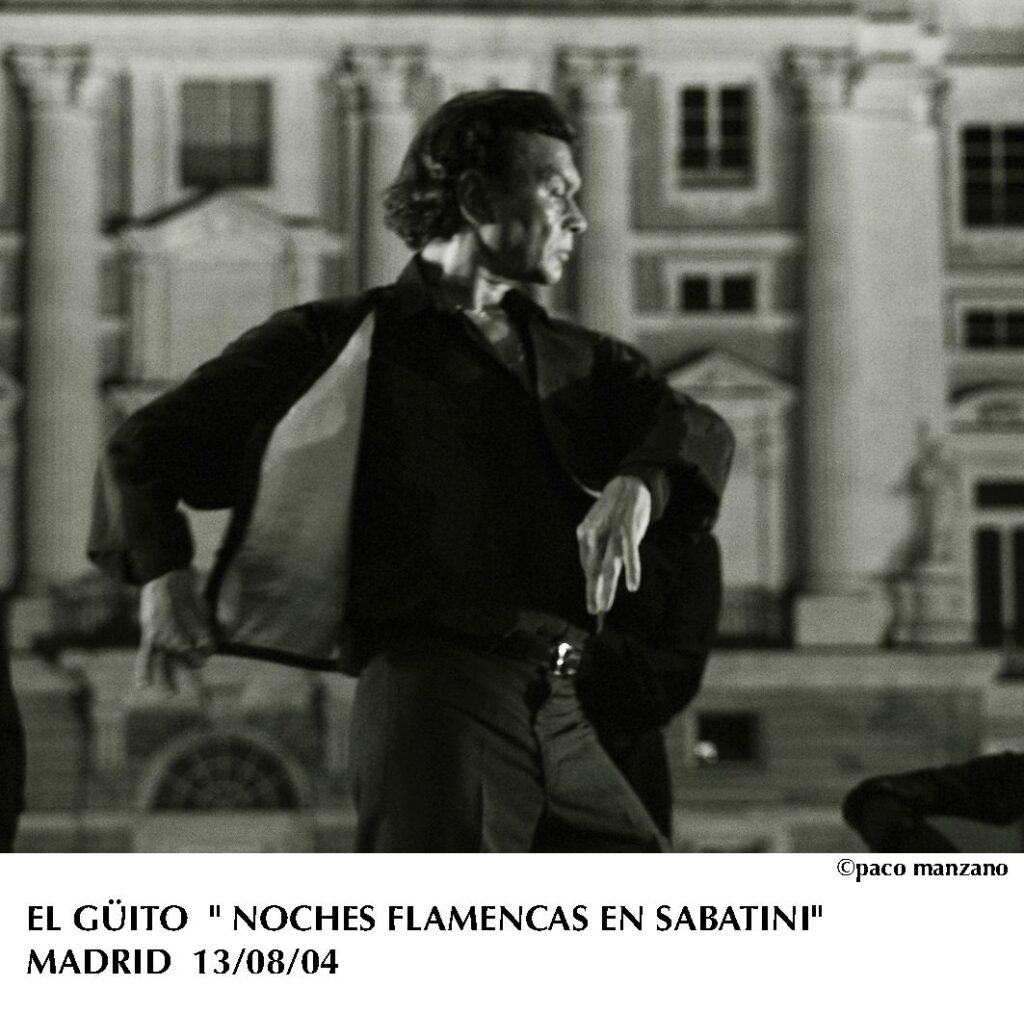
7. El Güito
Noches Flamencas en Sabatini, Madrid, August 2004. The Royal Palace in the background, the body in motion. A dancer who dances as if the entire city were his.
A dancer with Madrid as backdrop
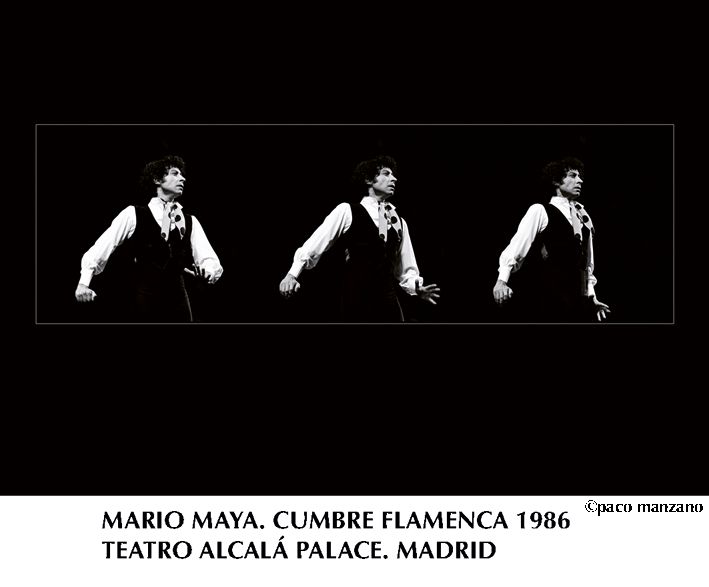
8. Mario Maya
Cumbre Flamenca 1986, Teatro Alcalá Palace, Madrid. The triptych that analyses the dance — three instants of the same movement that changed flamenco forever.
Three instants of the same dance