

Few garments are as instantly recognisable as a flamenco dress. One look is enough. But beneath the ruffles and the polka dots there’s far more than meets the eye: centuries of history, women who worked the land, and a garment that, oddly enough, has never stopped changing.
The origin of the flamenco dress: peasant women, gypsies and Andalusia
To find out where this comes from you have to go back centuries, to the peasant women and gypsies who worked the land in Andalusia. They wore ruffled smocks, colourful, with embroidery. They made them themselves. They weren’t after elegance: they were after something comfortable and cheerful to get through a day in the fields.
And here’s the interesting part. Those humble dresses, with their few little trimmings, caught the eye. So much so that wealthier women noticed them and started copying them. They swapped the percal for pricier fabrics —blonda, poplin—, tweaked the shape, the cut… and what had been workwear ended up as party attire. The ironies of fashion.
The mantillas are another story, though they ended up in the same place. They come from the veils of Iberian and Arab women. In the 17th century they start being made of lace, up until the 18th they were worn by common folk, and by the 19th they become a luxury item. Even queens wore them.
From the April Fair to a symbol of Spain: 1929
The big leap comes in 1929. That year the flamenca dress becomes the official attire for Seville’s Feria de Abril, and from then on there’s no stopping it. It turns into a symbol of Spain, it’s known abroad, it gets copied.
And it starts to evolve. It still does, by the way. It’s the only regional costume that reinvents itself every season and struts down catwalks as if it were haute couture. Fringes, lace, madroños… some years they’re in and the next they’re gone. But some things never leave: the ruffles and the polka dots are still there, just like on those dresses from the fields.
Types of flamenco dress: women and men
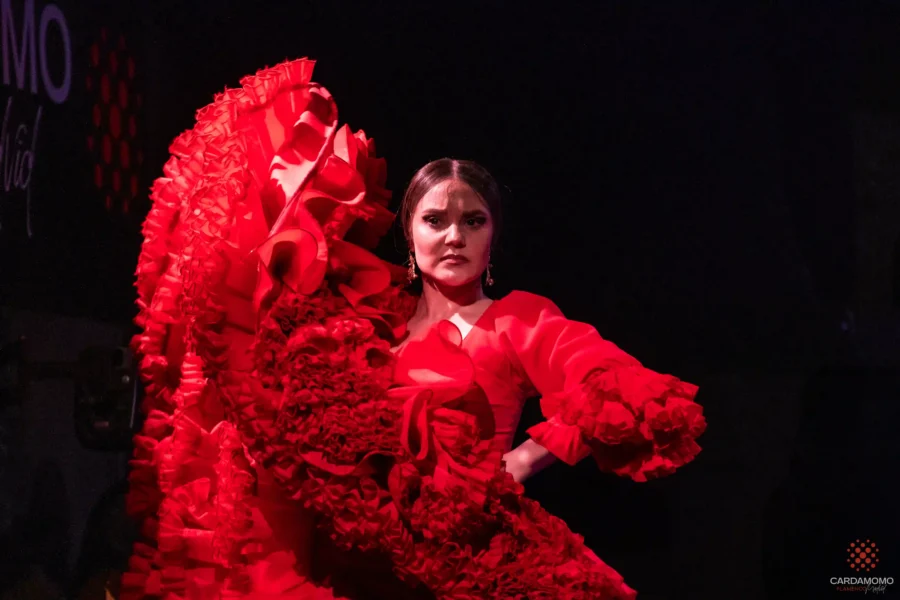
The flamenca dress
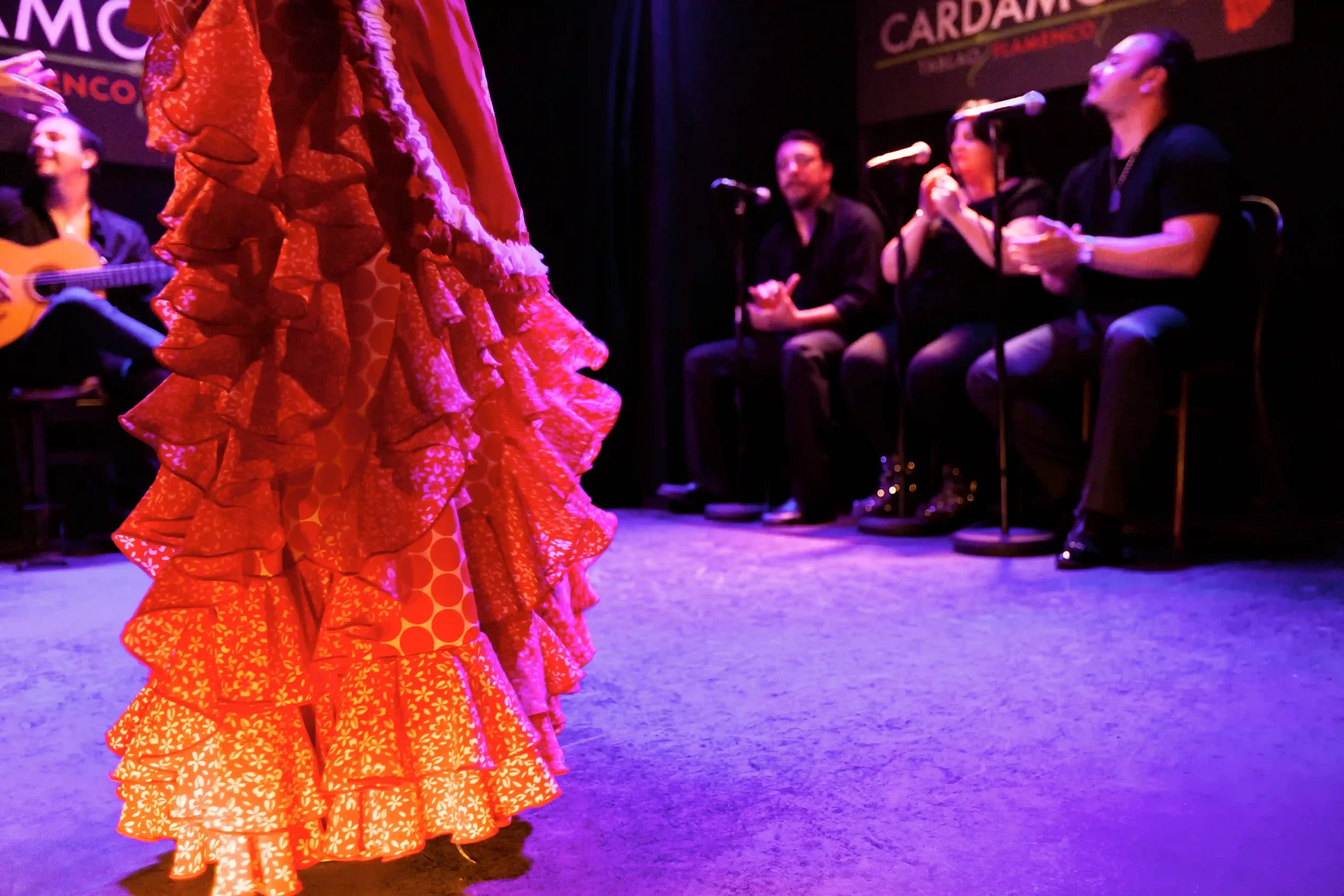
A bailaora in a ruffled flamenca dress during a live show at Cardamomo.
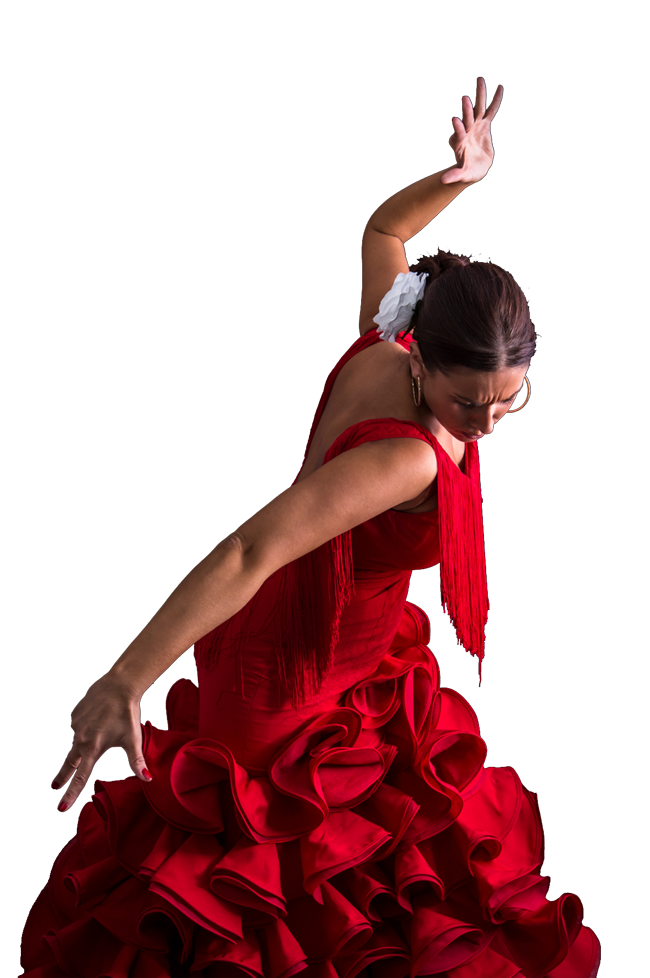
The bailaoras made it their own. They took it onto the stage and kept adding things to it: shawls, lace, new fabrics. Today you’ve got the classic faralaes one, the canastero, the bata de cola, more modern versions… but the spirit is the same. You can spot a flamenco dress a mile off.
The men’s flamenco outfit
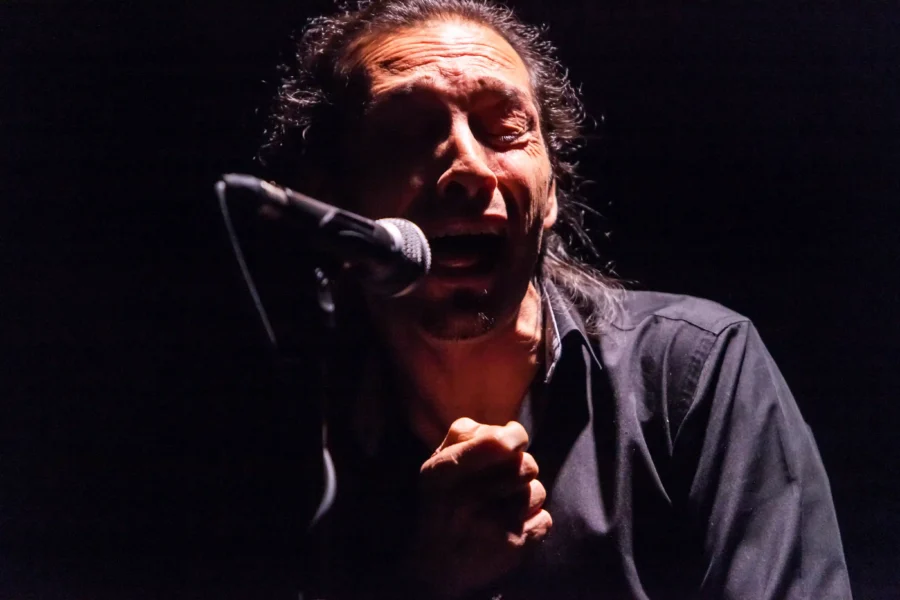
Gypsies, especially bailaores and cantaores, have always dressed with a certain something. A crisp white shirt, a scarf, a hat, a jacket, a sash. Plenty of personality and a fair bit of improvisation. The men’s outfit became official almost by accident, as the women’s dress became a regular sight at the fair.
It’s changed less than the women’s, that’s true. But it has its own unmistakable identity.
The flamenco dress today: a living tradition on stage
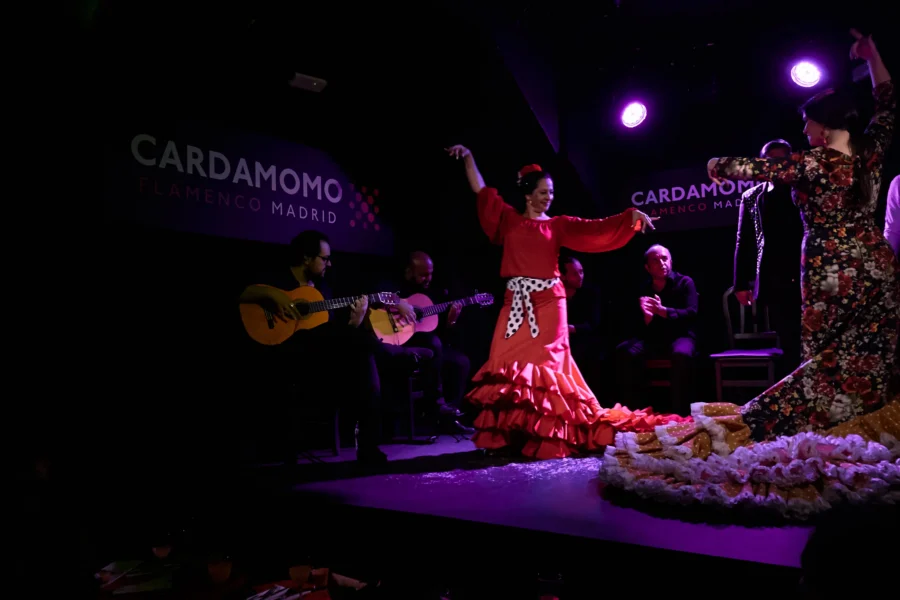
The flamenco dress doesn’t stay at the fair. In a tablao it’s part of the show: the sweep of the bata de cola, the weight of the shawl, even the rattle of the buckles counts. Sometimes the dress says things before the first note even sounds.
And the truth is, seeing it standing still in a photo doesn’t do it justice. Where you really get it is in motion, with live music. If you fancy seeing it that way, the best thing is a flamenco show in Madrid.