
Madrid at night is not just a city that doesn’t sleep. It is a city that, when the sun goes down, offers something few European capitals can match: the possibility of choosing from dozens of night plans without needing to end up in a nightclub. If that is what you are looking for, fine. But if what you want is for the night to leave you with something, the city has much more interesting options.
Madrid at night: a map that goes beyond conventional partying
There is a version of Madrid’s nightlife that most tourists never get to see. Not because it is hidden, but because it requires leaving the usual circuit of bars and terraces in the center.
The cultural Madrid at night begins in the Barrio de las Letras, the area between Paseo del Prado and Puerta del Sol where Cervantes, Lope de Vega, and Quevedo once lived. The cobblestone streets, small restaurants with real Spanish cuisine, and the concentration of cultural spaces make this neighborhood the best starting point for any night plan that doesn’t involve queuing at a nightclub door.
Beyond the Barrio de las Letras, Malasaña offers signature bars, live music in small venues, and an energy very different from that of big clubs. Lavapiés has alternative theater, arthouse cinema, and culinary offerings you won’t find in the most popular tourist guides.
Illuminated monuments and what to see in Madrid at night
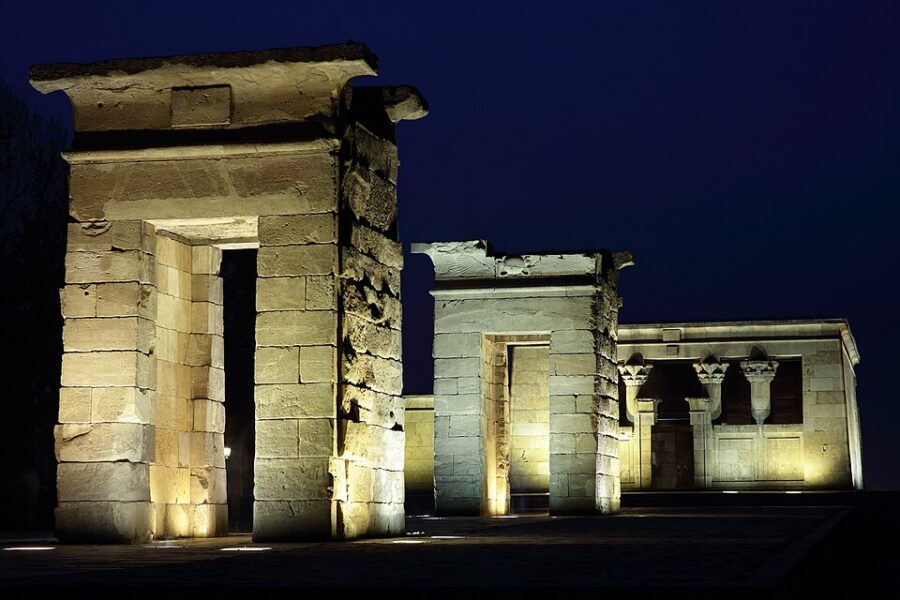
Madrid illuminated is another Madrid. The Royal Palace, seen from the Sabatini Gardens or from the Plaza de Oriente late in the afternoon, has a scale that is difficult to appreciate by day. The Temple of Debod — a 2nd-century BC Egyptian temple moved stone by stone to Madrid — at sunset is one of the most photographed spots in the city for a reason.
Gran Vía at night has something of Broadway without the musical. The illuminated early 20th-century buildings, the constant movement of people, the theaters with their lit marquees. It is a walk that costs nothing and that very few people take consciously.
For those who prefer something quieter, the Paseo del Prado at night, between the Prado Museum and the Botanical Garden, is one of those walks that remain in the memory of a trip much more than any museum visit.
Night plans in Madrid for couples with a cultural touch
If you are looking for what to do in Madrid at night as a couple with some cultural background, the options are varied but you have to know how to choose. A dinner in the Barrio de las Letras followed by a live show is the combination that works best — because it combines gastronomy, atmosphere, and experience without needing to overplan it.
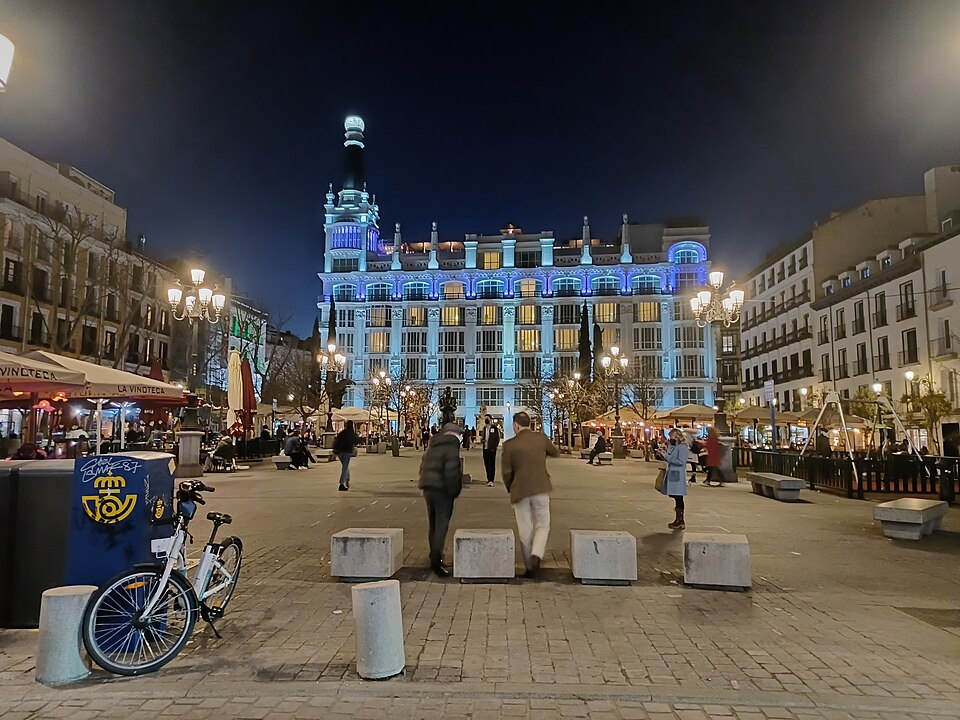
The illuminated Plaza de Santa Ana, the cultural epicenter of the Barrio de las Letras.
The Teatro Español, in the Plaza of Santa Ana, schedules high-level seasons of classical and contemporary theater. The Teatro de la Zarzuela has an opera and zarzuela program that surprises even those who are not regulars of this type of show.
For a more casual plan, small-room concerts in neighborhoods like Chueca or Tribunal offer jazz, flamenco music, blues, and many other genres in spaces where the artist and the audience share the same air.
Night shows: the heart of authentic Madrid nightlife
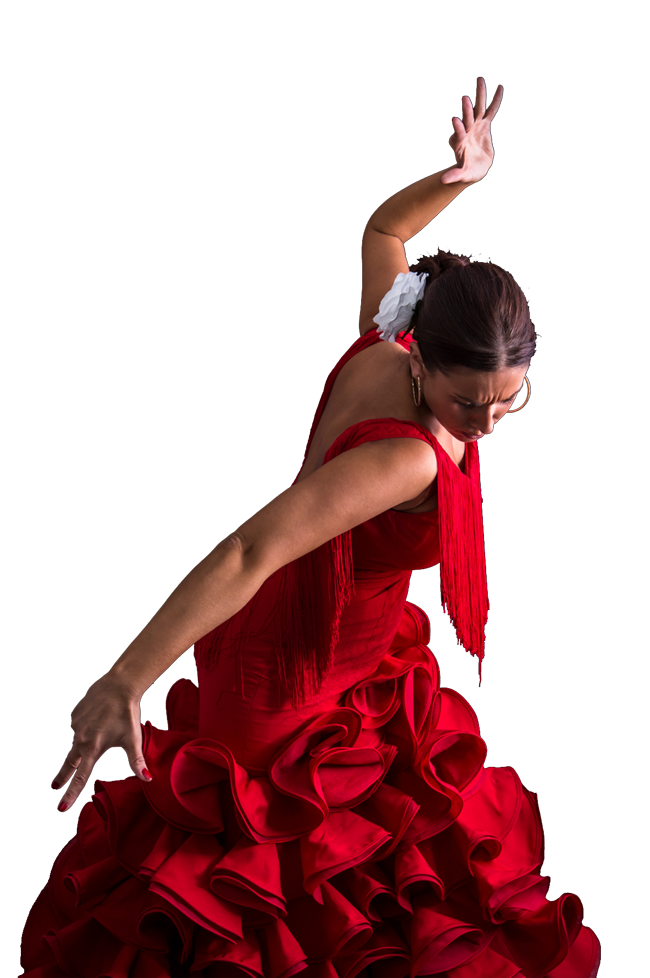
Madrid has a tradition of night shows that has nothing to do with nightclubs or cocktail bars. It has to do with the stage, the artists, and the audience in the same room. Live flamenco is the purest expression of that tradition — and it remains, decades after the first tablaos opened their doors in the center of Madrid, the most memorable night plan someone visiting the city can experience.
Not all flamenco shows are the same. There are those designed for the tourist who wants to check a box on their list of things to do, and there are those designed for someone who wants to truly understand what flamenco is about. The difference is noticeable in the artists, in the space, and in what happens between the first beat and the last.
Cardamomo: the perfect answer to what to do in Madrid at night
If there is a place in Madrid that answers the question of what to do in Madrid at night with something that goes beyond conventional entertainment, it is Cardamomo. Thirty years on Calle Echegaray, five minutes from Puerta del Sol, with four daily shows — 18:00, 19:30, 21:00, and 22:30 — and more than eight artists per show.
It is not a show designed for the audience to applaud at the correct moments. It is a flamenco show in an intimate space where the small capacity ensures that what happens on stage occurs just a few meters from whoever is watching. Cante, guitar, dance, and percussion without intermediaries — from bulerías to the deepest soleá.
It is the only tablao in Madrid recommended by the New York Times. And it has been the answer to the same question you are asking yourself now for over three decades.