
Put yourself in the situation. Bell-bottom pants, a country about to change its history and a youth that was crying out to break the rules. In the midst of that cultural boiling, jondo art did not just stand by and watch. It exploded.
The 70s decade was the Big Bang of our flamenco music. It was the time when cantaores stopped being seen as mere entertainers at private parties to become true stars of rock, filling squares and theaters to the brim.
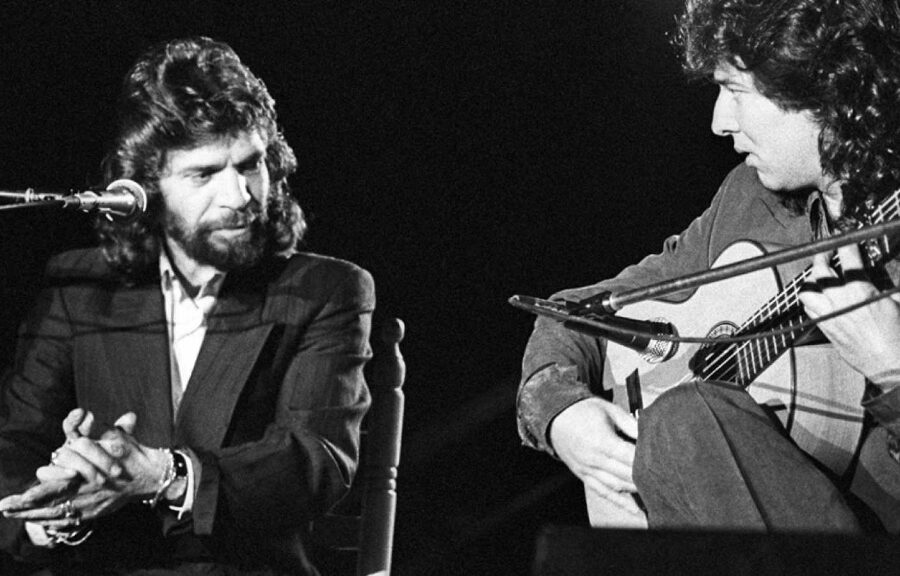
But, let’s be honest, what would a singing genius be without the six strings that reply to them? An a cappella voice thrills, but when it joins the best flamenco guitarists of the time, the history of music is rewritten. In this magical decade, the voice and the strings created an invincible alliance.
The context of flamenco in the 70s
To understand the magnitude of what happened, we must look at the context of the time.
Spain was opening its doors to the world. Record players brought sounds of jazz, rock and Latin music. Instead of getting scared and hiding, the 70s flamenco cantaores decided to absorb everything.
The great Andalusian festivals lived their golden age. The early mornings became eternal. The singing took to the streets, became massive and, for the first time, the lyrics began to speak of freedom, of forbidden poets and of the real problems of the street.
Flamenco cantaores of the 70s who marked an era
There were many names, but only a chosen few had the strength to change the course of history. They were pioneers, rebels and, above all, absolute geniuses.
Camarón de la Isla
If the 70s have a face, it is his. José Monje Cruz not only sang; he tore the soul. With his long hair and his unmistakable voice, he brought the singing closer to a whole new generation. His album “La leyenda del tiempo”, published just at the end of the decade (1979), scandalized the purists, but today it is considered the Bible of modern Spanish music.
Enrique Morente
The intellectual, the tireless seeker. While others repeated the usual formulas, Morente dared to sing to poets like Miguel Hernández or Federico García Lorca. His ability to innovate without losing respect for the roots made him the great architect of contemporary singing.
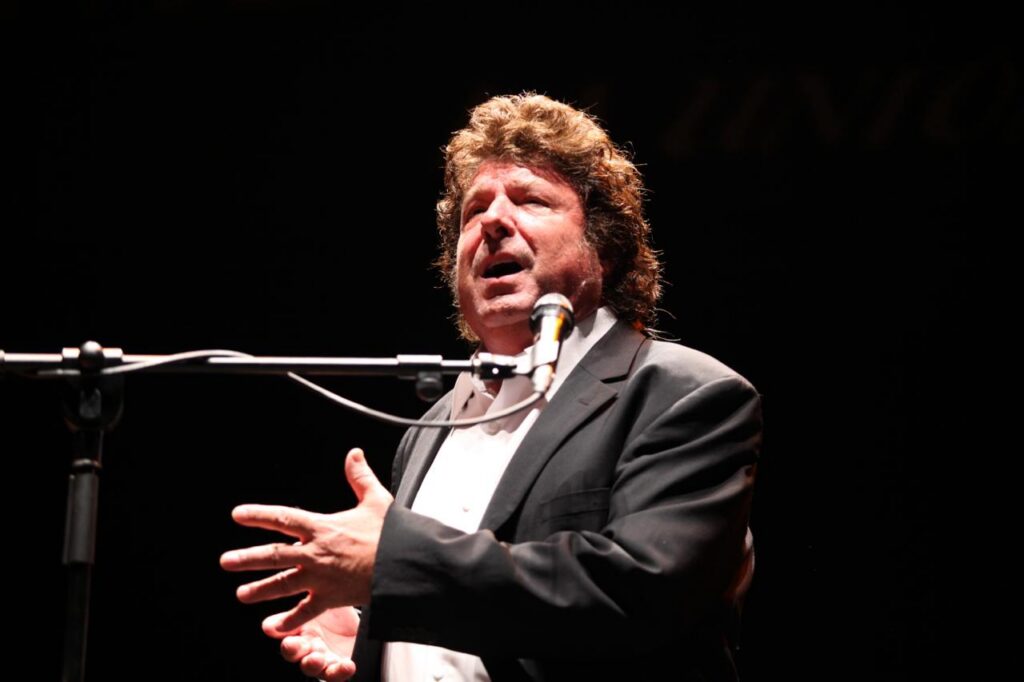
Morente: the echo that united purity and the avant-garde.
Antonio Mairena
In the midst of so much revolution, a guardian of purity was needed. Mairena was the great figure of authority. He dedicated his life to rescuing old styles that were about to be lost and demonstrated that the strictest tradition could also draw deafening ovations.
La Paquera de Jerez
Pure dynamite. When Francisca Méndez Garrido opened her mouth, microphones were not needed. She was the undisputed queen of bulerías and the wildest voice in Jerez. Her stage presence was a hurricane that devastated any stage she stepped on.
El Lebrijano
Juan Peña “El Lebrijano” demonstrated that singing had no borders. In the 70s he began to experiment, bringing his gypsy roots closer to Arabic and Andalusian sounds, creating musical bridges that no one had dared to cross until then.
Fosforito
The master key to all styles. After sweeping the most demanding competitions, in the 70s he established himself as an encyclopedic cantaor, capable of executing any rhythm with a perfection and a profundity (jondura) that left his colleagues breathless.
Terremoto de Jerez
He did not look for perfect tuning, he looked for the trance. Fernando Fernández Monje was the “duende” in its purest state. His way of singing was so visceral and so improvised that every performance of his in this decade became an unrepeatable rite.
How flamenco changed in this decade
The change was radical. Records began to sound different. New instruments were introduced, such as the electric bass and the first Peruvian cajones, which would change the rhythmic base forever.
Furthermore, record covers were filled with art and color. The flamenco cantaores of 1970 showed that their music was not a simple memory of the past, but a fiercely alive and modern art.
The legacy of the flamenco cantaores of the 70s
Today, everything we hear drinks from that source. Every time a young artist goes on stage, they carry in their throat a piece of Camarón’s bravery, Mairena’s wisdom and Morente’s rebellion.
The good news is that this fire has not gone out. That same raw and unfiltered strength is what we defend every night at the tablao flamenco.