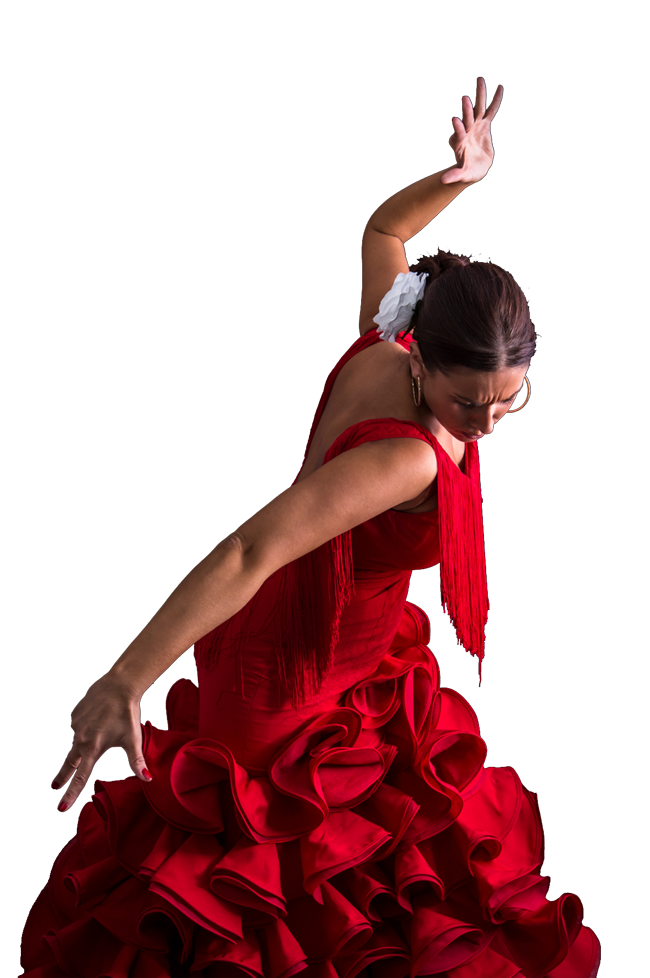


It is a professional and technical style that requires years of training. Throughout history, many different forms of transmission have existed — from oral tradition, just like flamenco singing or guitar playing, to the creation of dance scores or decalogues describing how the dance should be performed.
Originally, its professional nature meant that flamenco dance developed based on a gender division, with clear differences between men’s and women’s dance. Today, we know the techniques, gestures, and movements that correspond to femininity and masculinity, and we can use them artistically without imposing limits on each performer’s expression.

We can understand that flamenco dance arose as an encounter that took place in the academies of Seville between the gypsy dances, which were more expressive, and the bolera dancers, who were more technically developed.
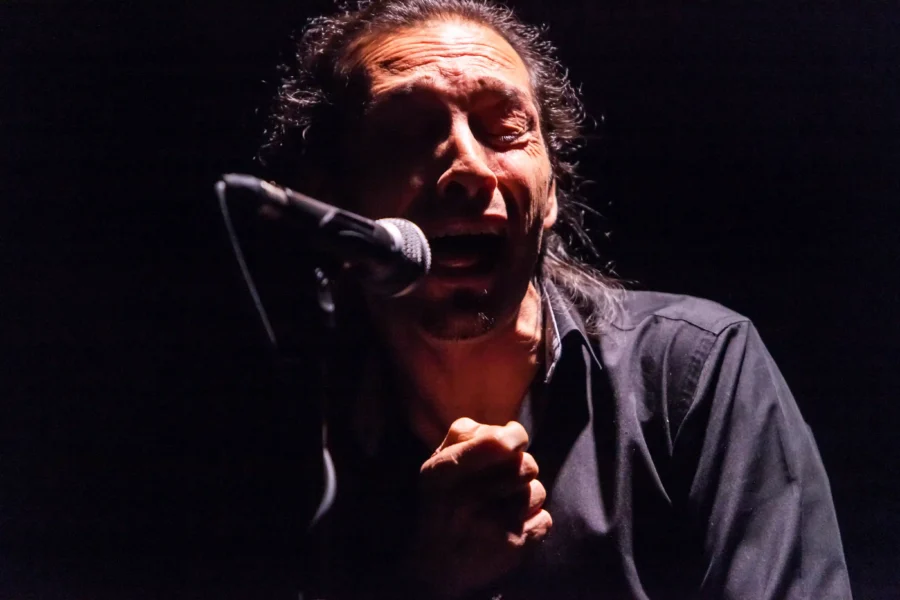
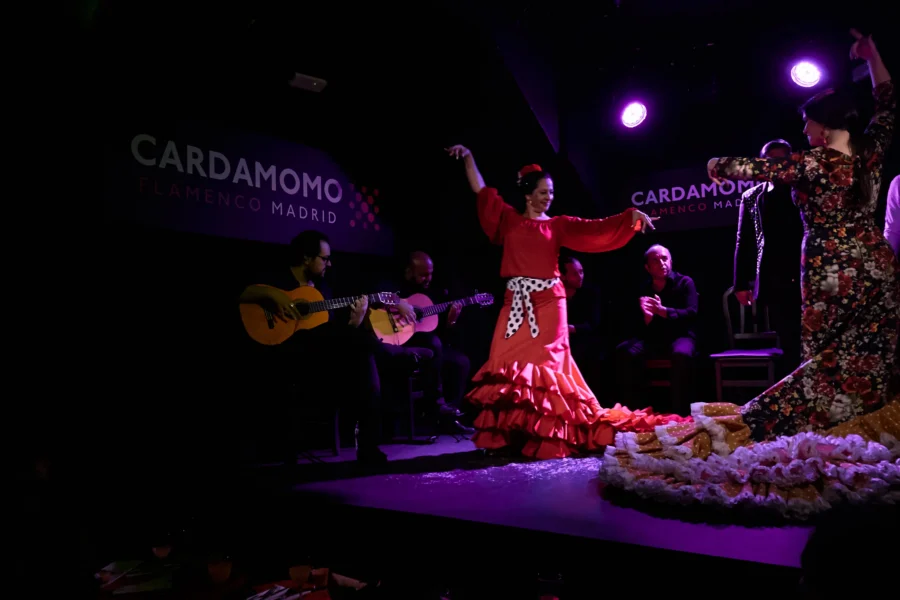
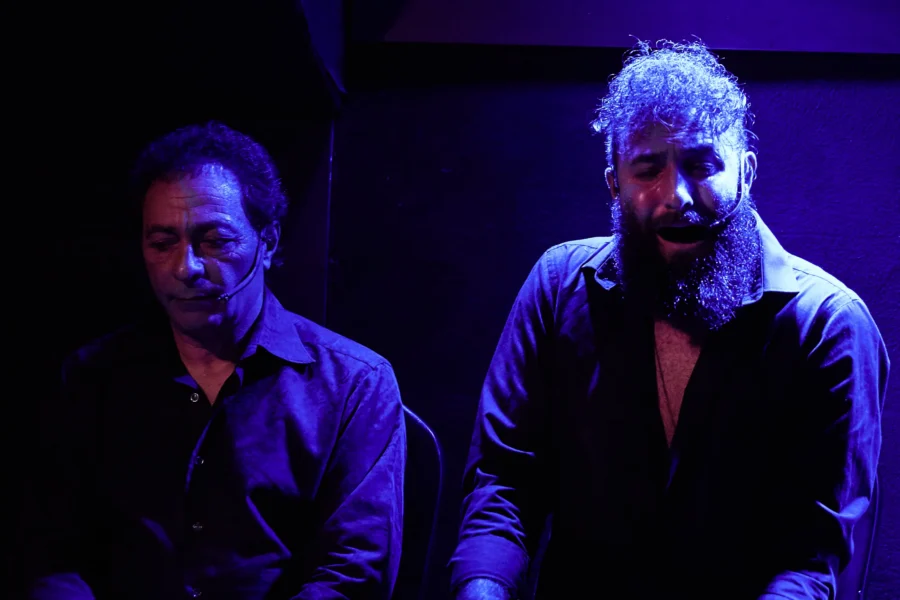
In the tablao of Cardamomo, dance and singing coexist with passion, springing from the deepest flamenco feeling.
If you want to experience flamenco dance in its most natural habitat, we recommend going to a tablao. In the tablao Cardamomo, the improvisation and spontaneity that dance needs come together.
An intimate space that resembles a meeting place among artists and that, without a doubt, forms part of the essence of flamenco in Madrid.