
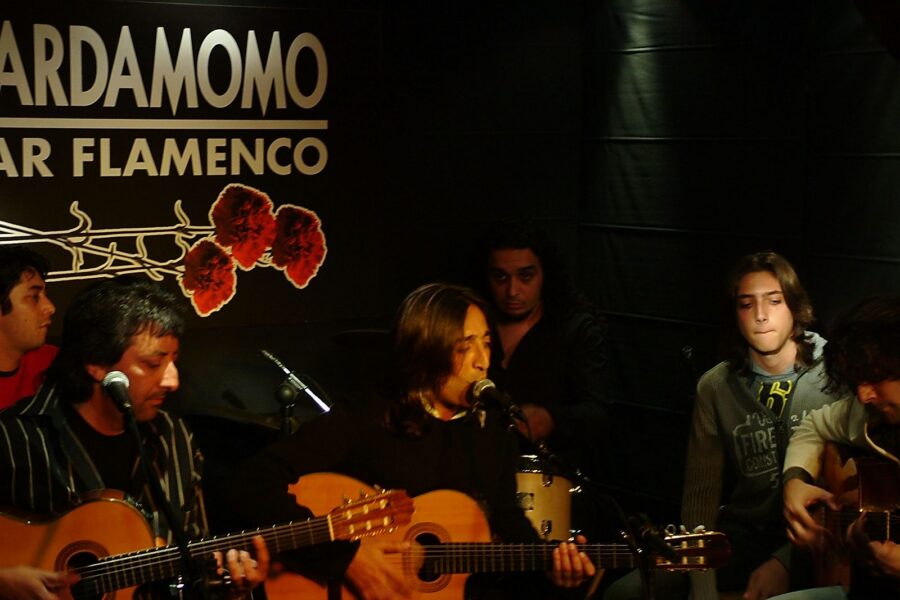
Flamenco is not a relic kept under lock and key so that no one can touch it; it is an art that feeds on change. As with great ideas, flamenco needs air to expand. If an art does not evolve, it becomes archaeology. Flamenco fusion is not a lack of respect for the roots; it is proof that flamenco remains the liveliest music in the world.
What is flamenco fusion?
Fusion is often confused with disorder. But real fusion is not just adding modern instruments; it is an intelligent dialogue between the soul of flamenco and other languages such as jazz, rock, or pop.
True fusion does not add genres; it multiplies emotions. It is that precise moment when the “quejío” meets a new harmony and both understand each other without the need for interpreters. That ability to mutate without losing identity is what makes the genre eternal.
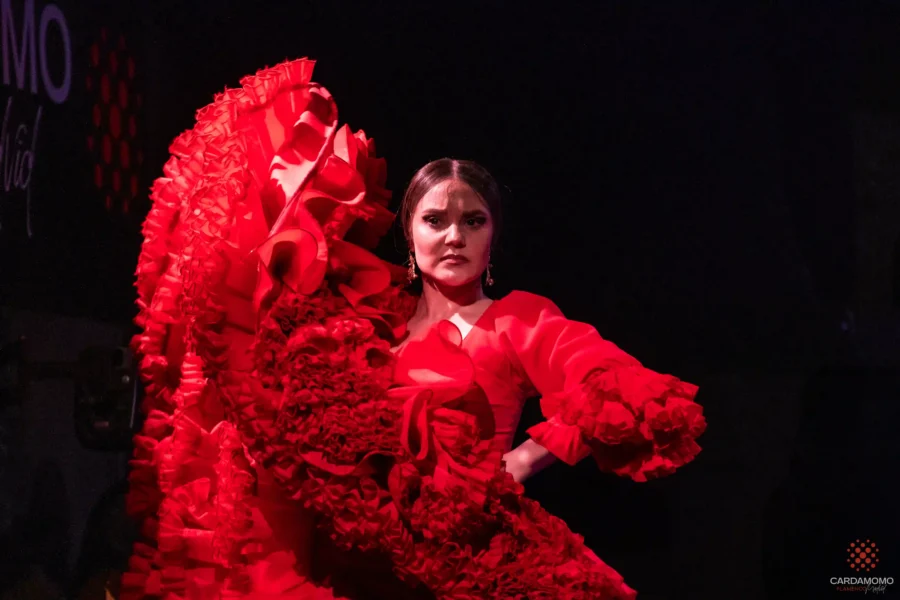
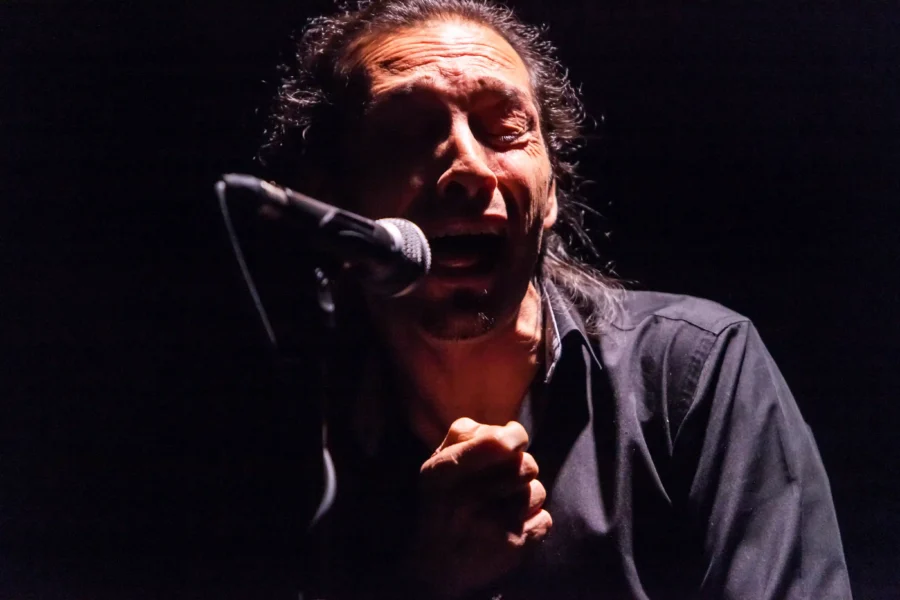
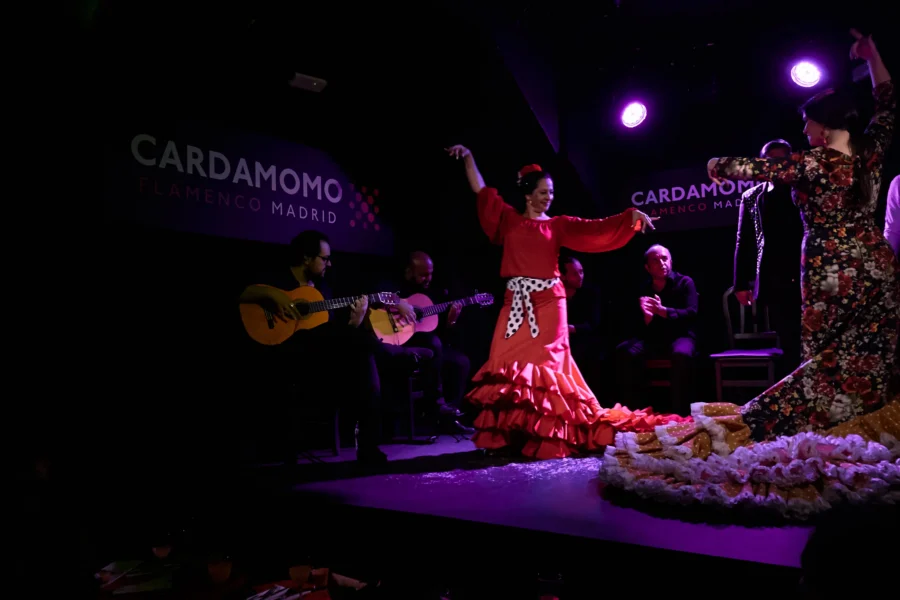
In the end, flamenco is a living art that is best understood when felt up close, vibrating live on the stages where the best flamenco in Madrid is cooked, there where tradition and experimentation coexist every night in the same rhythm.
Origins of flamenco fusion: from respect to innovation
Although flamenco was born from a mixture of cultures, the “fusion” movement as such exploded in the 70s. It was a moment of necessary rupture. Artists who mastered the traditional canon felt they had more to say and that the classical language was not enough for them.
Innovating requires more courage than repeating, but the risk was worth it. It was a decade of wild freedom where flamenco learned to speak one-on-one with the world. To truly understand what was going through the minds of the masters who decided to cross that line, nothing helps more than immersing oneself in the words of the artists themselves. It is in the flamenco interviews with the great figures of the genre that one discovers that technique, however perfect, only makes sense when there is a real story to tell.
How flamenco merges with other musical styles
Fusion is not a magic formula; it is a sound architecture. Depending on the dance partner, flamenco transforms:
- Instrumentation: The electric bass or the saxophone brought new colors. But the most radical change was the Peruvian cajón. Paco de Lucía brought it from America and, in just a few years, it became so essential that today no one imagines a flamenco group without its beat.
- Harmony and rhythm: The flamenco guitar dared with blues chords and jazz structures. It was a stretching of the limits that allowed flamenco to sound in clubs in New York or London with the same force as in the caves of Granada.
- The “Nuevo Flamenco”: In the 80s, this concept democratized the art. Rumba became pop and flamenco became much more accessible, proving that quality is not at odds with massive success.
Key artists of flamenco fusion
Ogilvy said that facts are what build credibility. These are the names that changed the rules of the game:
Paco de Lucía
The genius who dignified flamenco on international stages. He didn’t just play the guitar; he built bridges between jazz and tradition.
Camarón de la Isla
With La Leyenda del Tiempo, Camarón broke the glass. He didn’t record an album; he launched a declaration of musical independence that still resonates.
Lole and Manuel
They brought a new light, a hippie poetic, and a fresh air that made flamenco young again.
Pata Negra
The Amador brothers created “blueslería.” They were the first to prove that flamenco could be electric and dirty, like street blues.
Flamenco fusion on current stages
Today, the debate over whether fusion is good or bad has been left behind by its own weight. Flamenco fusion is a reality that fills stadiums and has allowed the “arte jondo” to mix with electronics or urban rhythms without breaking a sweat.
Purity is not a dogma; it is a matter of honesty. At Cardamomo, we defend the flamenco that dares, the one that is not afraid to ask “what if…?”. Because in the end, flamenco is free or it is not flamenco.